

The Appearance Tells a Story
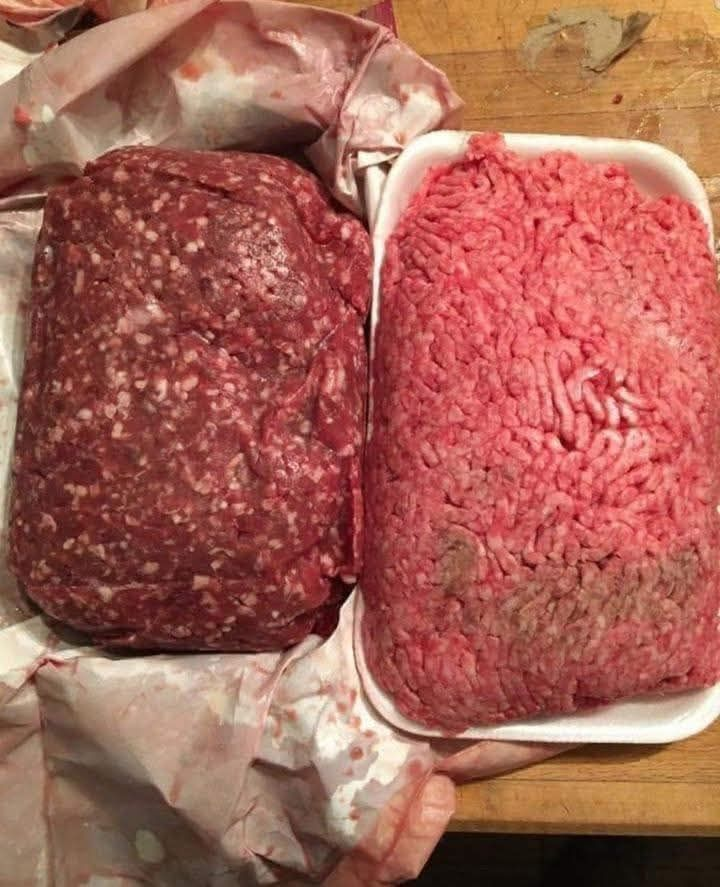
The darker color of the beef on the left suggests it hasn’t been exposed to as much oxygen or preservatives, and it may have a higher fat content, often indicating fresher, less processed meat. The beef on the right, though brighter in color, is not necessarily fresher. In fact, that bright pink hue is often due to carbon monoxide packaging or other gas treatments used to keep the meat looking fresh longer. And if you look closely at the bottom of the right package, there’s a grayish-brown spot—likely a sign of oxidation, which happens when meat is aging or hasn’t been stored properly.
Advertissement
Quality Over Convenience
Many shoppers grab the neatly packaged meat in foam trays without thinking twice, but that convenience often comes at the expense of quality. Mass-produced meat may include additives, be ground from various cuts, or even come from multiple animals. On the other hand, butcher-ground meat is typically made from a single cut, often with no fillers or extras—just pure beef.
What to Look For
Color: Fresh ground beef should be a cherry red on the outside, but don’t panic if it’s a bit brown inside—oxygen exposure affects color. What you don’t want is a funky gray or greenish tint, especially paired with a sour smell.
Texture: High-quality ground beef is coarser and denser. The overly uniform, soft texture of some commercial meat can be a sign of over-processing.
