
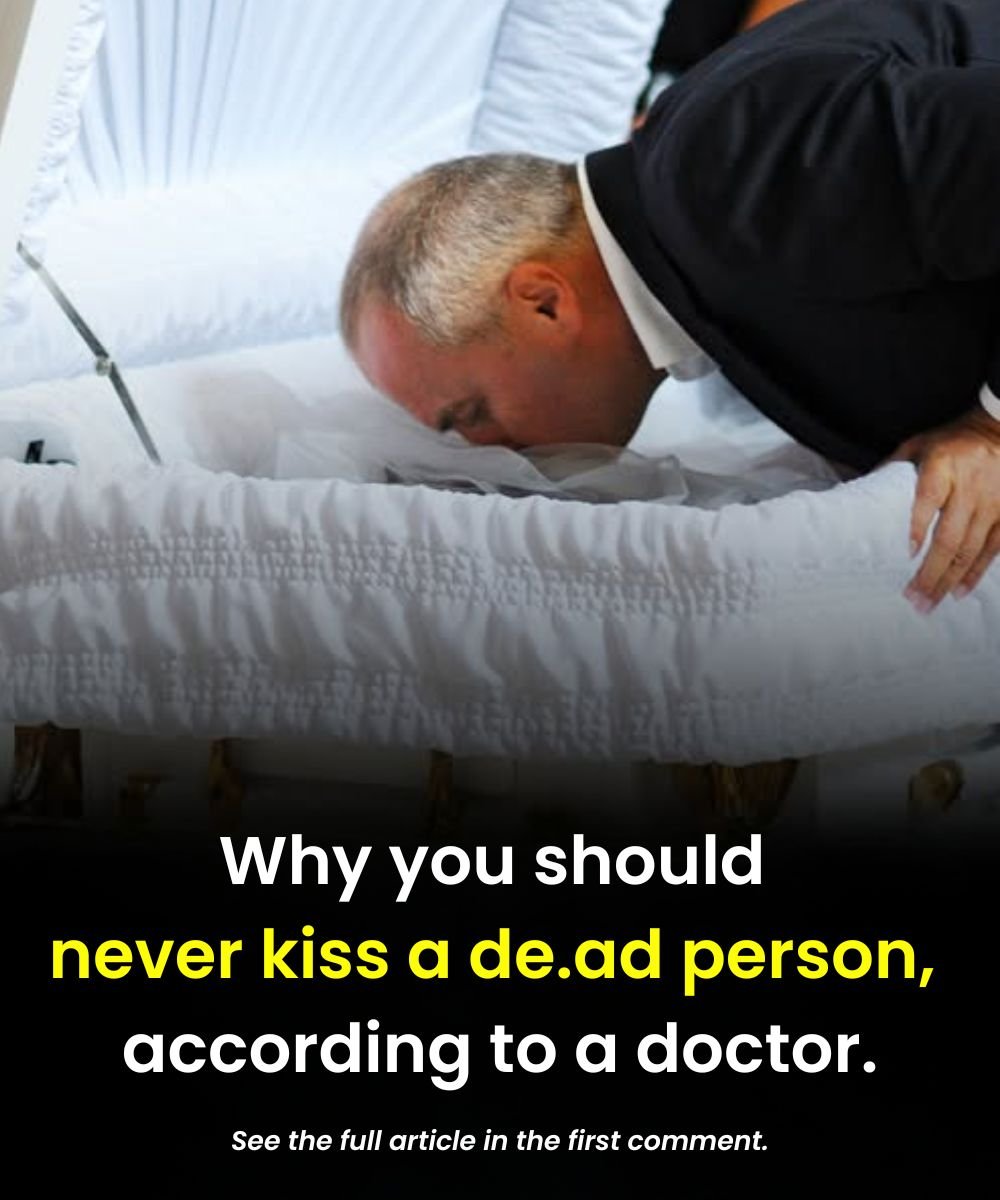

This is why healthcare workers and funeral staff follow strict hygiene protocols regardless of the cause of death.
Myth 3: “A quick kiss on the forehead is harmless”
A brief kiss may feel innocent, and in many cases it does not lead to illness but medically, it is not risk-free. The mouth is a direct entry point for bacteria. Even minimal contact can pose a small risk, particularly for children, elderly individuals, or those with weakened immune systems.
Doctors do not say this to discourage grieving rituals, but to encourage safer alternatives when possible.
Myth 4: “Funeral homes always make the body safe to touch”
Funeral professionals take many steps to prepare the body respectfully, especially if embalming is involved. However, not all bodies are embalmed immediately, and some cultural or religious practices avoid embalming altogether.
Preparation reduces risks, but it does not eliminate them completely. This is why staff may advise against close contact in certain situations.
Myth 5: “Touching the deceased is necessary for emotional closure”
Psychologists emphasize that closure does not come from a specific physical action. Many people find peace through words, prayers, presence, or symbolic gestures rather than physical contact. While touch can be meaningful for some, it is not the only—or the healthiest—way to say goodbye.
Grief is personal, and no single ritual determines how well someone will heal.
CONTINUE READING IN THE NEXT PAGE
