
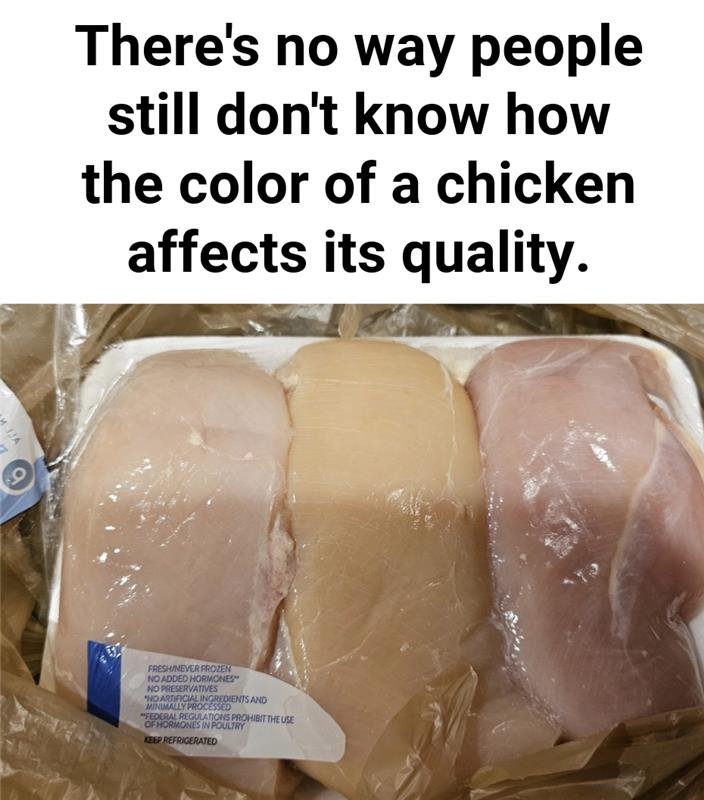

Ever Wonder Why Some Chicken Is Yellow …Here’s the Real Reason
Ever stood in the supermarket staring at two trays of chicken—one pale, one golden yellow—and wondered why they look so different? You’re not alone. Many shoppers assume color reveals freshness, flavor, or nutritional value. The truth? It’s far more interesting than that.
What Chicken Color Really Means
Chicken color does reveal something—but not necessarily quality.
White Chicken
Pale chicken typically comes from birds raised indoors in large-scale, factory-farming environments. Their diet usually consists of grains like corn, wheat, and soy. These chickens grow quickly, move very little, and rarely see sunlight.
The result? Meat that’s pale pink or white, sometimes with a slightly bluish cast.
Yellow Chicken
Yellow chicken often comes from birds fed a more natural, carotenoid-rich diet. Ingredients such as corn, greens, and even marigold petals contribute to the golden color.
It’s the same idea as flamingos turning pink from shrimp—the pigments in the diet change the animal’s appearance.
Free-Range vs. Pasture-Raised: What’s the Real Difference?
Labels can be confusing:
- Free-range only means the chicken had some outdoor access—how much is not specified.
- Pasture-raised means the birds roamed open fields, foraging on grass, insects, and seeds.
Pasture-raised chickens typically have:
- Higher omega-3 levels
- More vitamins A and E
- Better muscle tone
- Healthier fat ratios
Their meat tends to be more flavorful—and yes, often more yellow.
CONTINUE READING IN THE NEXT PAGE
